

I was on a Zoom call with a buyer from Chicago recently who was ready to pull the trigger on a spectacular $1.2M ocean-view home in Tamarindo. But right before we ended the call, he hesitated and asked the question almost every first-time buyer asks:
“Josh, how do I actually pay for this? Am I just wiring a million dollars to some bank in Central America and hoping it doesn’t disappear?”
It is a completely rational fear. For most people, moving that amount of capital across international borders feels like sending money into a black hole. But the reality of Costa Rica investment is the exact opposite. Costa Rica’s banking sector is heavily regulated, and the financial guardrails are actually stricter here than they are in the United States.
If you are buying property here, you are not wiring money into the abyss. You are utilizing a highly structured, SUGEF-audited chain of custody.
The Reality Check: Safe financial transactions in Costa Rica real estate rely on a strict chain of custody to prevent fraud and money laundering. You will never wire money directly to a seller or a real estate agent. Instead, your funds will flow from your home bank to a US-based correspondent bank, and then directly into a third-party, SUGEF-regulated Costa Rican escrow account. The funds are legally locked there until the Notary Public officially records the deed transfer.
The “Black Hole” Fear vs. The Reality
The fear of the “black hole” stems from a misunderstanding of how Costa Rican banks interact with the global financial system.
Costa Rica is deeply integrated into the international banking grid. To combat money laundering, the government regulatory agency (SUGEF) requires exhaustive “Know Your Customer” (KYC) documentation before a single dollar can cross the border.
This means that before you wire any money, your real estate attorney and your escrow company have already verified your identity, your tax returns, and the legal source of your funds. The system is designed to be highly bureaucratic specifically to ensure that the money moving through it is 100% clean and secure.
The Required Chain of Custody (How the Money Actually Flows)
So, how does the money actually get from your account in Illinois to the seller in Guanacaste? It follows a very specific three-step process:
- The Originating Wire: You instruct your home bank to wire the funds.
- The Correspondent Bank: Costa Rican banks do not receive direct international wires. Your money first lands in a “Correspondent Bank” located in the US (typically a major institution like Bank of America, Wells Fargo, or Citibank).
- The Escrow Account: The US Correspondent Bank then routes the money directly into the Costa Rican fiduciary account of your SUGEF-regulated escrow provider.
Once the funds arrive in escrow, they are locked. The escrow company acts as a neutral referee, bound by the exact terms of your Purchase Agreement.
Why Cashier’s Checks and Crypto Don’t Work
I still get asked if a buyer can just bring a cashier’s check on the plane or pay with Bitcoin.
- Cashier’s Checks: Do not bring a check. Costa Rican banks will place a massive hold (up to 30 days) on foreign checks to verify them, completely derailing your closing timeline.
- Cryptocurrency: While you can technically execute a private transaction in crypto, it is incredibly difficult to pass SUGEF compliance to register the deed. Unless you are using a specialized, regulated crypto-to-fiat brokerage to handle the AML compliance and convert the funds to USD before closing, traditional sellers and attorneys will not touch it.
Wire transfers are the only reliable, legally protected way to execute the transaction.
The Role of the Escrow Disbursement Agreement
The final safety net is the Escrow Disbursement Agreement.
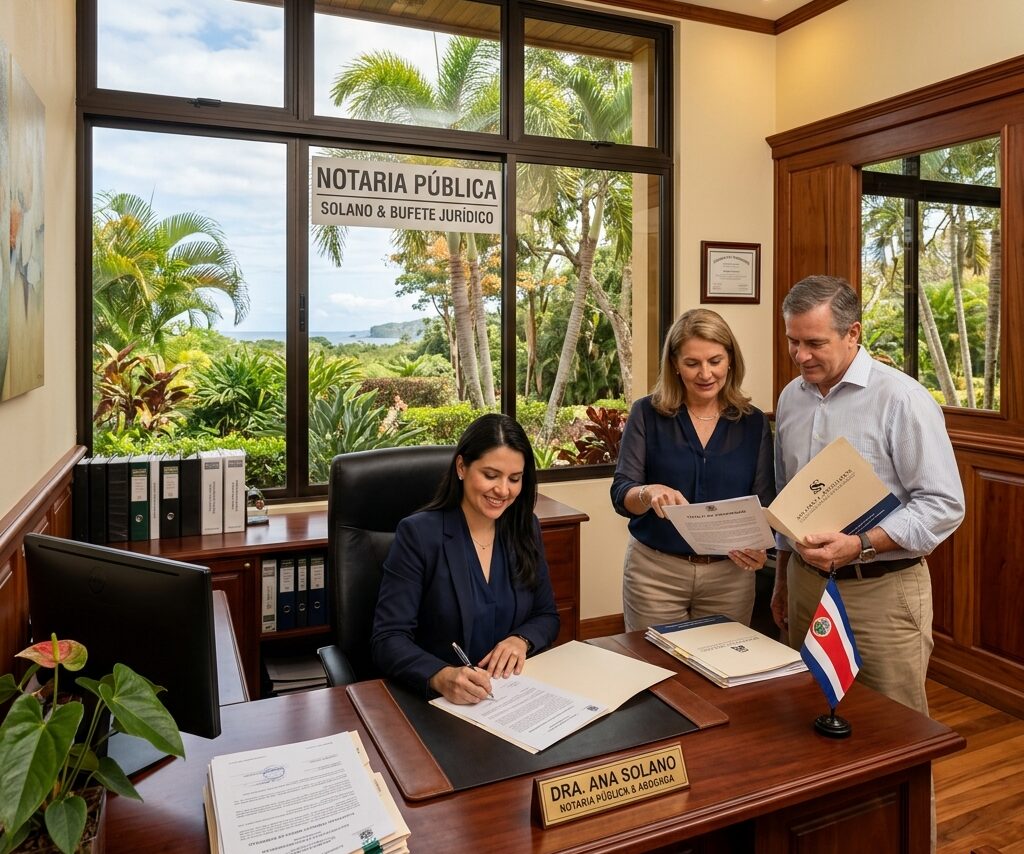
On the day of closing, your attorney (the Notary Public) signs the deed and presents it to the National Registry. At that exact moment, the escrow company executes the Disbursement Agreement. They pay the real estate commissions, they pay the transfer taxes, they pay the legal fees, and they release the final net proceeds to the seller.
The seller does not get paid until the title is legally yours.
The Bottom Line
Buying property in Costa Rica is not the Wild West. It is a highly structured, heavily regulated financial process. As long as you use a reputable, SUGEF-regulated escrow company, your capital is protected from the moment it leaves your bank until you have the keys in your hand.
If you want to know exactly how your capital will be protected from the US to Guanacaste, let’s talk. I make sure my clients’ funds are bulletproof.
📩 josh@kraincostarica.com
Frequently Asked Questions
Is it safe to transfer money to Costa Rica to buy property?
Yes, it is highly secure, provided you wire the funds directly to a SUGEF-regulated escrow company. Never wire money directly to a seller, a developer, or a real estate agent.
How do you pay for a house in Costa Rica?
The vast majority of real estate transactions in Costa Rica are cash purchases executed via international bank wire transfers (in USD). The funds are routed through a US correspondent bank and held in a local third-party escrow account until the closing date.
Can I open a bank account in Costa Rica to buy a house?
While not strictly necessary to buy a house (as you will use escrow), opening a local bank account makes paying future utility bills and property taxes much easier. To open a bank account, you typically need to establish a Costa Rican corporation (S.A. or S.R.L.) or have legal residency.


Leave a Reply