
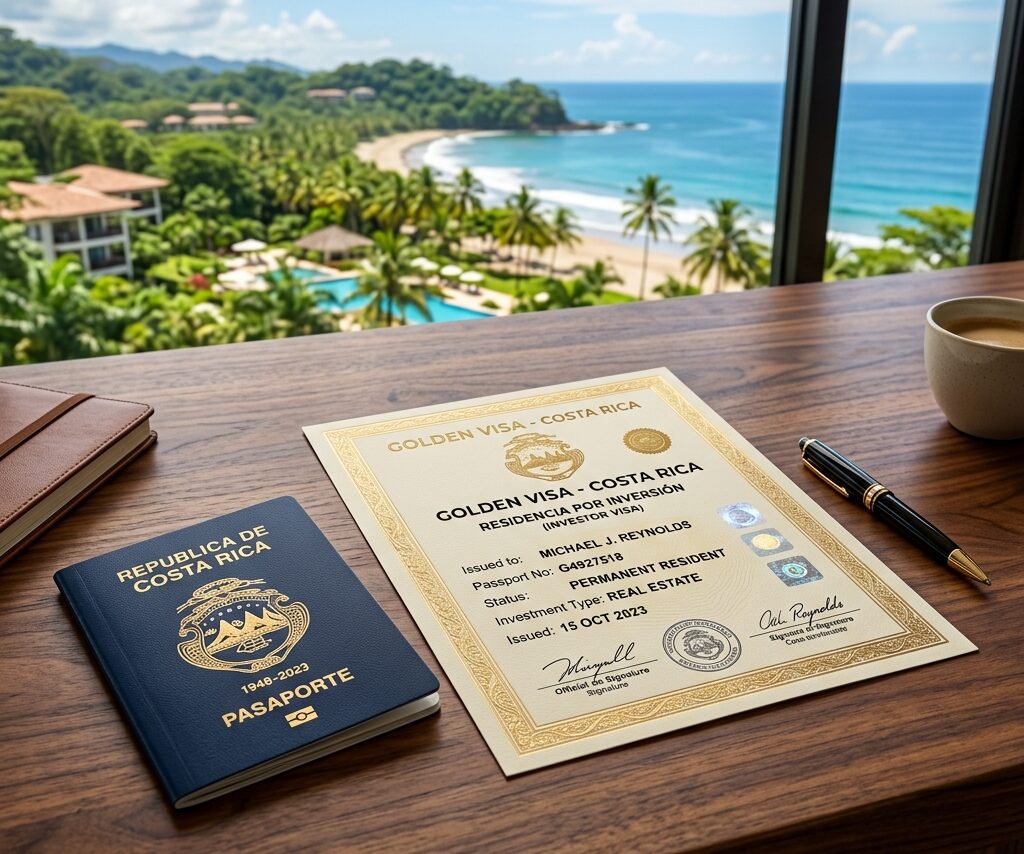

I constantly see expats make the same exhausting mistake. They buy a beautiful $800,000 home in Flamingo, set up a great life, and then every 180 days, they pack their bags and do a “border run” to Nicaragua just to renew their tourist visa.
They treat their massive Costa Rica real estate purchase solely as a place to sleep, completely ignoring the fact that their investment is a golden ticket.
If you are deploying significant capital into Guanacaste, living on a tourist visa is inefficient and unnecessary. The government wants your capital, and in exchange, they offer one of the most accessible residency by investment programs in Latin America.
The Reality Check: The Costa Rica Investor Visa (Inversionista) requires a minimum investment of $150,000 USD in Costa Rican real estate, registered business, or forestry projects. Once approved, this temporary residency grants you a legal DIMEX card, allowing you to stay in the country indefinitely, open local bank accounts easily, and, most importantly, import up to two vehicles and all your household goods completely tax-free under Law 9996.
The $150,000 Real Estate Threshold
Prior to 2021, the threshold to qualify as an investor was $200,000. To stimulate the post-pandemic economy, the government lowered that minimum to $150,000 USD.
However, there is a critical “boots on the ground” nuance you must understand: The $150,000 must be the registered value of the property in the National Registry.
* You cannot buy a raw piece of land for $100,000, build a $50,000 house on it off-the-books, and claim you hit the $150k threshold.
* The official deed (escritura) or the municipal property tax declaration must reflect a value of $150,000 or higher.
* The investment must be unencumbered. If you finance the property, your cash equity must still meet or exceed the $150k minimum.
The Real ROI: Tax Exemptions and Import Benefits
The real ROI of the Investor Visa isn’t just about avoiding border runs; it is about the massive tax benefits established under Law 9996 (The Law to Attract Investors and Retirees).
When your residency is approved, you are granted the following one-time exemptions:
1. Tax-Free Vehicle Import: You can import up to two vehicles (cars, boats, or aircraft) for personal use completely free of import taxes. Given that import duties on vehicles in Costa Rica can reach 50% to 70% of the vehicle’s value, this alone can save you tens of thousands of dollars.
2. Household Goods Exemption: You can import your entire household of furniture, appliances, and personal items without paying the standard import duties.
3. Territorial Tax System: Costa Rica only taxes income generated within its borders. If your income is sourced from the US, Canada, or Europe, Costa Rica will not tax it, even if you are a legal resident.
Do You Have to Live in Costa Rica Full-Time?
One of the biggest misconceptions about the Investor Visa is the physical presence requirement. Buyers often ask me, “I only plan to spend the winters in Guanacaste. Will I lose my residency?”
No. Under the current laws, you are only required to visit Costa Rica for a minimum of one day per year to maintain your Investor Residency status. This makes it an incredibly flexible option for “snowbirds” or high-net-worth individuals who want a Plan B passport track without uprooting their primary life in the US.
The Timeline: From Tourist to Legal Resident
While the requirements are straightforward, the bureaucracy is not. The Directorate General of Migration (DGME) moves at its own pace.
Once you purchase your property and submit your application (which requires apostilled FBI background checks and birth certificates from your home country), the approval process currently takes anywhere from 9 to 15 months.
However, the moment your application is officially filed and you receive your expediente (file number), you are legally allowed to remain in Costa Rica while it processes. You no longer need to do 180-day border runs.
The Bottom Line
If you have the capital to invest in Guanacaste, do not settle for being a perpetual tourist. The $150,000 Investor Visa is a highly efficient way to legally anchor yourself in the country, protect your assets, and save massive amounts of money on vehicle and household imports.
If you’re deploying capital into Guanacaste, you should be leveraging the investor visa. Let’s find an asset that qualifies and get your residency process started.
📩 josh@kraincostarica.com
Frequently Asked Questions
How much do I need to invest to get residency in Costa Rica?
To qualify for the Investor Visa (Residencia Temporal como Inversionista), you must invest a minimum of $150,000 USD. For real estate investors, this amount must be reflected as the registered value of the property in the National Registry or through a certified municipal appraisal.
Do I have to pay income tax in Costa Rica if I have an Investor Visa?
Costa Rica operates on a territorial tax system. You only pay income tax on money generated within Costa Rica (such as rental income from your property). Income generated outside of Costa Rica (e.g., US business income, pensions, foreign investments) is not taxed by the Costa Rican government.
Can I bring my car to Costa Rica tax-free?
Yes, under Law 9996, individuals who are approved for the Investor, Pensionado, or Rentista residency programs are permitted to import up to two vehicles for personal use completely exempt from standard import duties.

Leave a Reply