

If you drive the coastal highway in Guanacaste, you will see massive infrastructure: mega-resorts, large condo towers, and sprawling golf course communities.
If you drive south past Dominical to Uvita, the landscape changes entirely. The jungle is thicker, the mountains are steeper, and the mega-resorts simply do not exist.
This is not an accident. It is a highly intentional zoning and development strategy. Uvita is home to the Marino Ballena National Park, famous for its whale breeding grounds. The local community and the municipality have fiercely fought to protect this biodiversity, leading to the rise of low-density sustainable developments.
For investors, this “anti-resort” movement has created an incredibly lucrative micro-market.
The Reality Check: Do not mistake “sustainable” for “cheap.” The most expensive, exclusive inventory in the Southern Zone consists of ultra-luxury eco-friendly villas hidden within these low-density reserves. Because developers are restricted from building 100-unit towers, the artificial scarcity of high-end homes in Uvita drives massive appreciation and premium rental rates.
The Architecture of Low-Density
A typical low-density development in Uvita might sit on 100 acres of primary rainforest, but the developer will only carve out 15 to 20 lots.
The remaining 80+ acres are placed into a protected biological trust or private reserve.
This guarantees two things for the buyer:
1. Absolute Privacy: Your nearest neighbor might be 200 yards away through dense jungle.
2. Permanent Unobstructed Views: Because the surrounding land is protected, no one can ever build a hotel in front of your ocean view.
Water Security and Off-Grid Capability
The Southern Zone receives massive rainfall, but managing water infrastructure during the dry months requires advanced planning.
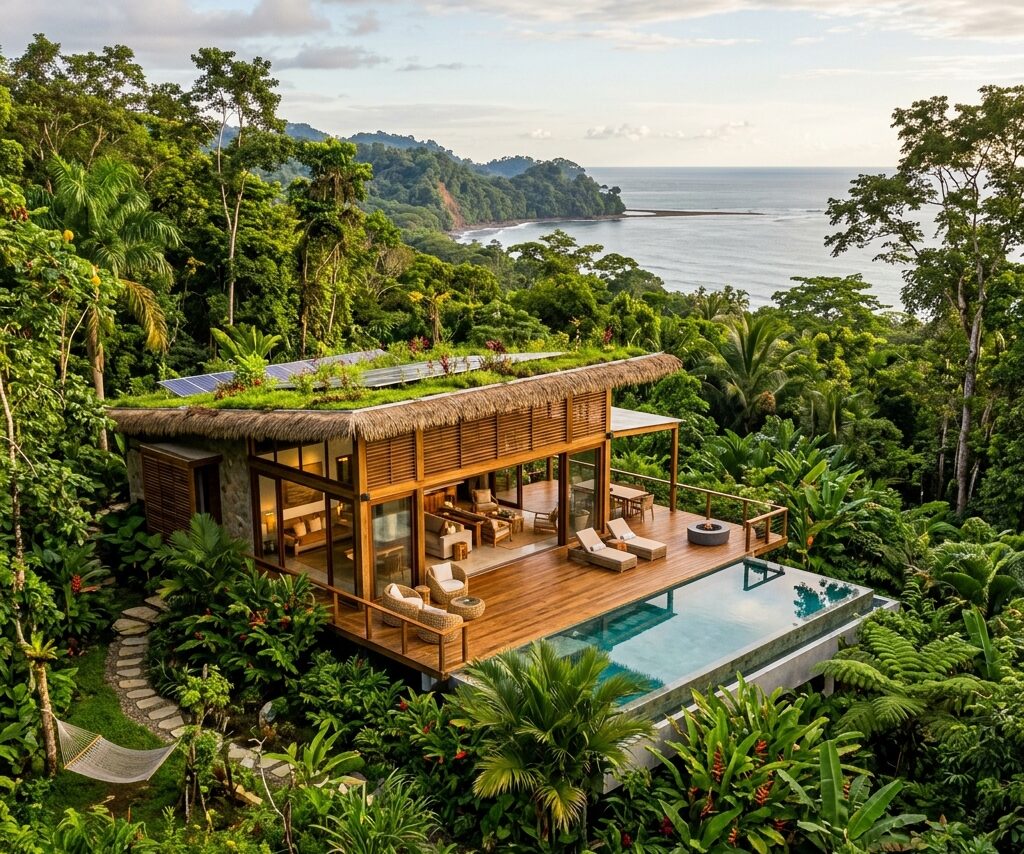
The top sustainable homes in Uvita developments are built with full autonomy in mind. They utilize advanced rainwater harvesting systems, storing tens of thousands of liters in subterranean tanks. They employ greywater recycling to irrigate permaculture gardens.
Furthermore, many of these communities mandate or highly encourage massive solar arrays and lithium battery banks, ensuring that the properties remain powered and comfortable even during the intense thunderstorms of the green season.
The “Jungle Luxury” Rental Premium
The demographic that travels to Uvita is distinctly different from the Tamarindo crowd.
They are not looking for beach clubs or nightlife. They are affluent eco-tourists, bird watchers, and wellness enthusiasts who want a profound immersion in nature without sacrificing Five-Star luxury.
When you offer a $2.5M architectural masterpiece—featuring raw concrete, massive glass walls, and infinity pools—set seamlessly into a biological reserve, you can command $2,000 to $3,000 a night. Renters are willing to pay an extraordinary premium for the sheer exclusivity and environmental integrity of the experience.
The Barrier to Entry
Because the municipality tightly controls building permits (Uso de Suelo) and environmental approvals (SETENA) near the Marino Ballena park, bringing a new development to market takes years of capital and patience.
This massive barrier to entry protects current investors. You do not have to worry about a massive hotel chain buying the land next door and flooding the market with cheap rooms.
The Bottom Line
Uvita proves that environmental protection and massive real estate ROI are not mutually exclusive. In fact, in the luxury sector, the environmental protection is the amenity driving the ROI.
If you are looking for an asset that offers unparalleled privacy and aligns with global sustainability trends, let’s look at the low-density inventory in Uvita.
📩 josh@kraincostarica.com
Frequently Asked Questions
What is a low-density development?
A low-density development restricts the number of homes built on a large parcel of land, often preserving 70% to 80% of the property as untouched green space or a biological reserve, ensuring absolute privacy for the homeowners.
Is Uvita a good place to invest in real estate?
Yes. Uvita is highly desirable because of its proximity to the Marino Ballena National Park. Because the local government restricts mega-resort development, the supply of luxury homes remains low, driving strong appreciation and high rental yields.
Can you build near the national park in Uvita?
Building near Marino Ballena National Park is subject to strict environmental regulations and buffer zones. Developers must undergo rigorous environmental impact studies (SETENA) to ensure their projects do not harm the local biodiversity or marine life.
Leave a Reply