

The word “eco” in Costa Rica used to mean a wooden cabin in the jungle with no air conditioning and unreliable Wi-Fi. That era is over.
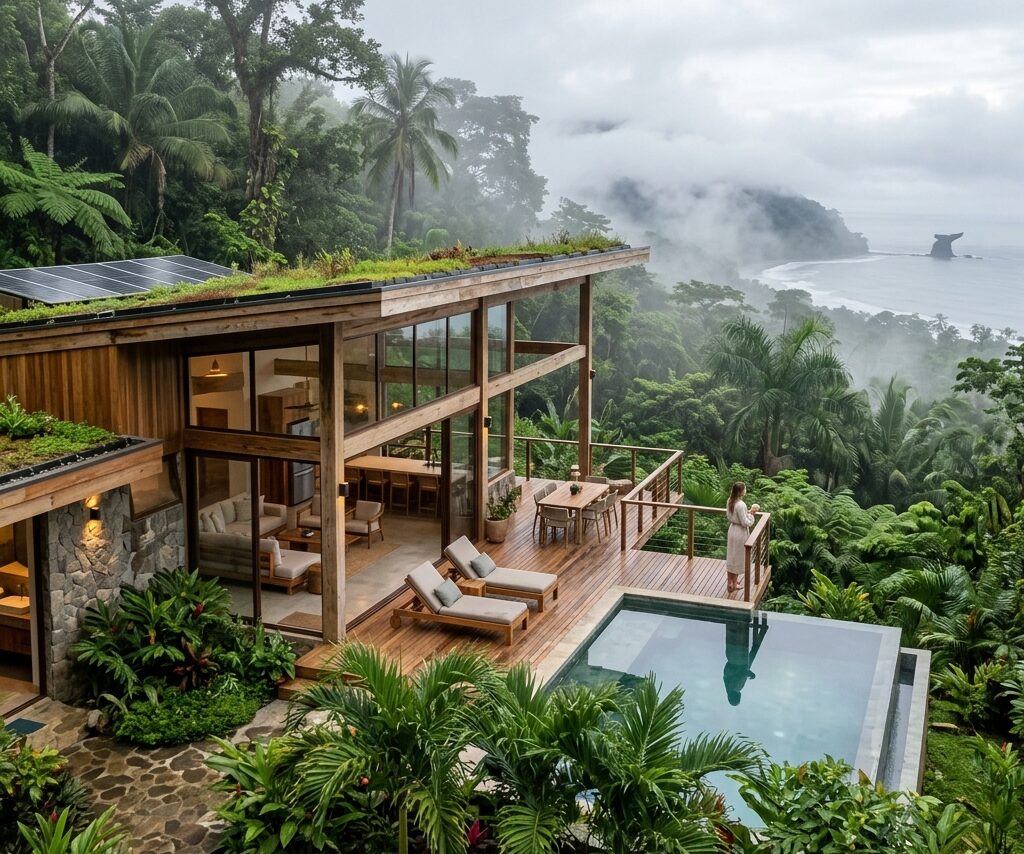
Today, sustainable luxury in Uvita means cutting-edge, climate-responsive architecture. It means infinity pools filtered without harsh chemicals, commercial-grade solar arrays, and high-speed fiber optic internet—all seamlessly integrated into primary rainforest.
Buyers coming to the Southern Zone are not looking for the paved, resort-style development of Guanacaste. They are looking for Uvita land that offers total immersion in nature without sacrificing first-world comforts. And they are willing to pay a massive premium to get it.
The Reality Check: Building near the Marino Ballena National Park involves navigating some of the strictest environmental regulations in Costa Rica. You cannot simply bulldoze a lot and pour concrete. Setbacks from rivers, forestry protection laws, and strict zoning require specialized architects. Buying a pre-approved, turn-key sustainable home is often significantly more lucrative than attempting to build from scratch.
Redefining “Eco-Luxury” in the Southern Zone
The demographic buying eco-friendly villas in Uvita is highly specific. They are tech executives, wellness entrepreneurs, and high-net-worth individuals who view sustainability not as a buzzword, but as a non-negotiable standard of living.
They want:
* Passive Cooling Design: Homes engineered to catch ocean cross-breezes, minimizing the need for 24/7 air conditioning.
* Energy Autonomy: Lithium-battery solar systems that keep the house running seamlessly even during rainy season grid outages.
* Water Management: Advanced rainwater catchment systems and biodigesters.
When you offer this level of off-grid independence wrapped in high-end design, your property enters a completely different pricing tier.
Navigating Environmental Regulations Near Marino Ballena
The main draw of Uvita is the Marino Ballena National Park (famous for the Whale’s Tail sandbar). But living next to a protected marine sanctuary means the government is watching your property closely.
If your property touches a river or a natural spring, Costa Rican law dictates massive construction setbacks (up to 50 meters in some cases). If you have primary forest on your lot, you cannot cut down trees to improve your ocean view without explicit permission from MINAE (the Ministry of Environment and Energy).
This regulatory friction is actually a massive benefit to investors. Because building is difficult, the supply of high-end homes remains artificially low, driving up the value of existing inventory.
The Premium Investors Will Pay for Net-Zero Homes
Let’s talk about the ROI.
If you are operating a high-end short-term rental, your biggest OpEx (Operating Expense) is electricity. Running A/C units in the tropics is incredibly expensive. A true sustainable home with a net-zero solar setup drastically reduces your monthly carrying costs, inflating your net margins.
Furthermore, the “eco-luxury” traveler in Uvita expects sustainability and will happily pay a 15% to 20% higher ADR (Average Daily Rate) to stay in a home that aligns with their environmental values.
The Bottom Line
Sustainable luxury in Uvita is an asset class of its own. It requires a deeper understanding of environmental zoning and off-grid technology, but the returns—both in lifestyle and yield—are unparalleled.
If you want to invest in the Southern Zone without compromising on luxury or ecological integrity, let’s talk. I can guide you toward the right pre-approved lots or turn-key eco-villas.
📩 josh@kraincostarica.com
Frequently Asked Questions
Are sustainable homes a good investment in Uvita Costa Rica?
Yes. High-end, sustainable homes command premium rental rates and have lower operating costs (due to solar power and passive cooling), making them highly lucrative investments in the Southern Zone.
Is Uvita a good place to invest in real estate?
Uvita is experiencing rapid growth, driven by buyers who want the lush, jungle environment that Guanacaste lacks. However, strict environmental regulations limit mass development, which protects property values and ensures long-term appreciation.
Can you build a house near a national park in Costa Rica?
Yes, but you must adhere to strict environmental zoning laws, including setbacks from rivers, protected forestry regulations, and restrictions on how close you can build to the actual park boundary.
Leave a Reply